
Meet UBC Sauder’s new faculty – Shaojun Zhang
Related Links
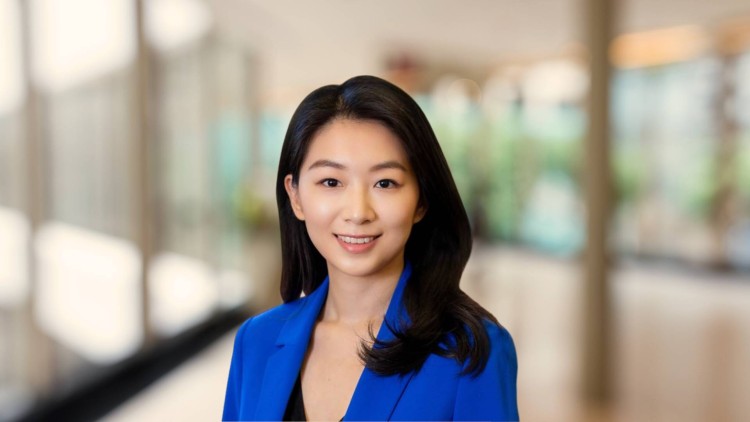
Each year, UBC Sauder welcomes new lecturers and tenure-track faculty to the school. In this article, we introduce you to Shaojun Zhang, Assistant Professor in the Accounting Division.
Where are you from, and what brought you to UBC Sauder?
I grew up in China, earned my Bachelor's degree from Peking University, and earned my PhD in finance from NYU's Stern School of Business. I've also held academic positions at The Ohio State University and the University of Hong Kong, and previously worked in the industry as a portfolio manager. My diverse background across top global institutions, my practical experience in asset management, and my research interest in climate finance align well with UBC Sauder's commitment to rigorous, relevant research and teaching. I'm excited to join the UBC Sauder faculty.
What are your areas of research or your fields of expertise, and how did you get into this field?
My primary research fields are asset pricing, international finance, and climate finance. I am fundamentally interested in the dynamics of expected returns, their connection to the macroeconomy, and the emerging impact of climate change on financial markets. My industry experience as a portfolio manager at both China Investment Corporation and Vanguard provided me with a real-world perspective on investment challenges, which naturally drove me to pursue academic research focused on issues like systematic risk, factor investing efficiency, and global asset allocation.
What continues to fuel your research or interest in these areas?
The finance landscape is constantly evolving, which is incredibly stimulating. Currently, two major themes fuel my work: globalization (which necessitates understanding international equity returns and exchange rate predictability, as seen in my work on limited risk sharing and housing cycles) and the urgent issue of climate risk. For example, my research on carbon transition risk and energy transition is motivated by the need to provide investors and policymakers with empirically sound methods for measuring and managing climate transition risk. The search for robust, data-driven solutions to complex, real-world investment problems keeps my research active and relevant.
What inspires you to teach?
I teach Investments and Investment Management. What inspires me is equipping the next generation of financial professionals with the critical thinking and quantitative tools necessary to navigate complex markets. My research, especially on topics like factor construction, risk management, and portfolio optimization, directly informs my teaching, allowing me to bring cutting-edge academic findings right into the classroom. The goal is to move beyond theory and train students to be effective, informed decision-makers.
What’s one of the most interesting things you’ve discovered through your research or through your educational journey?
One of my most interesting discoveries relates to the measurement of climate risk in financial markets. In my work, “Carbon Returns across the Globe,” I found that the previously documented positive “carbon return”—implying that brown firms earn a risk premium—was largely an artifact of using emissions data that hadn't accounted for the data release lag. Once we adjusted for that, the carbon returns turned negative in the U.S. and insignificant globally. This highlights how crucial accurate, time-adjusted data is for measuring and responding to carbon transition risk, fundamentally challenging conventional wisdom.
What do you believe is the future of your industry?
I see the future of finance moving rapidly toward two major areas:
- Data and AI Integration: The proliferation of alternative data will fundamentally change how investment decisions and due diligence are conducted, moving away from reliance solely on traditional financial statements.
- Sustainability and Risk Management: Climate finance will become central to asset pricing. As the climate change risk continues, investors will increasingly need to price carbon transition risk and climate physical risks accurately to build resilient portfolios.
Can you tell us an interesting fact about yourself?
Before I joined UBC Sauder, I gained valuable practical experience by working as a portfolio manager, trading every day. This background gives me a unique perspective, bridging the theoretical rigor of academic finance with the real-world constraints and strategic decisions faced by large institutional investors.
What are you most looking forward to in Vancouver?
I am excited to be joining the vibrant academic community at UBC Sauder. Professionally, I look forward to collaborating with my new colleagues on impactful research. On a personal note, Vancouver’s stunning natural environment and its unique position as a gateway for global finance will provide an ideal setting for both my research on international finance and the development of new insights in climate finance.
Stay in touch
Join Think Outside, our monthly newsletter and stay up-to-date on our innovative academic programs, world-leading faculty and research, and student and alumni achievements.