
Meet UBC Sauder’s new faculty – Sha Liao
Related Links
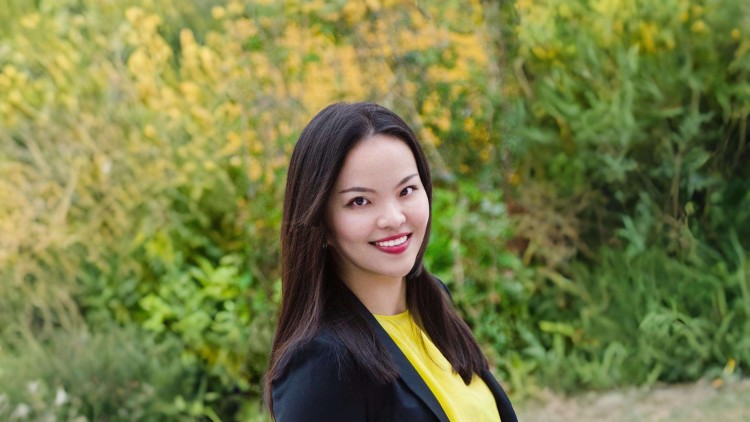
Each year, UBC Sauder welcomes new lecturers and tenure-track faculty to the school. In this article, we introduce you to Sha Liao, Lecturer in the Operations and Logistics Division.
Where are you from, and what brought you to UBC Sauder?
I grew up in China and came to Canada to pursue my PhD in Operations Management at UBC Sauder. It was my first time living abroad, and I still remember the feeling of stepping into a completely new world where the sky stayed bright past 9 p.m. in the summer and the air smelled of ocean and cedar. What first drew me to UBC Sauder was its mix of academic rigor and practical purpose, and what has kept me here ever since is the people. The mentorship, generosity, and sense of belonging I found here shaped both my career and my life. Returning as a faculty member feels like coming home.
What are your areas of research, and how did you get into this field?
My research explores how organizations make better decisions using mathematical models and data. I study topics such as sustainability, contract design, new product development, and behavioral decision-making, all areas where numbers meet human judgment. One stream of my work examines how renewable energy policies influence utilities’ investment and trading choices, while another looks at how firms and suppliers collaborate in developing new products. I have also used causal inference methods to study how carbon pricing under the European Union’s Emissions Trading System has changed airline operations. What excites me most is the connection between abstract models and tangible impact, and how analytical tools can help solve real challenges facing businesses and society.
What continues to fuel your interest in these areas?
I am deeply motivated by curiosity and by the belief that good analysis can make a real difference in the world. Mathematical models reveal structure in complexity, and data tell the stories behind decisions. Operations management constantly challenges me to connect the two, to translate ideas into insight and insight into action. The problems I study are never static. Sustainability, supply chains, and emerging technologies keep reshaping what good decisions look like. That constant evolution keeps my research fresh and reminds me that learning never stops.
What inspires you to teach?
I teach because I have seen how education can change a life. When I first came to Canada, I arrived with little more than a suitcase, uncertain about how I would find my place. It was my professors and classmates who guided me, encouraged me, and showed me what was possible. Teaching gives me the chance to do the same for others, to help students grow intellectually, build confidence, and discover their own strengths. Whether it is a first-year student learning to tackle open-ended problems or a graduate student refining a complex model, I feel privileged to witness their progress. I see teaching as both a calling and a responsibility, my way to give back and make a lasting, positive impact on society.
What is one of the most interesting things you have discovered through your research or educational journey?
Rather than pointing to something purely interesting, I would say the most impressive part of my educational journey has been working alongside the remarkable faculty at UBC Sauder. I am continually inspired by how innovative, adaptive, and dedicated my colleagues are, yet how grounded and collaborative this community remains. Every conversation sparks new ideas and reminds me why I love being in academia. The culture here balances excellence with humility, and that combination is rare and powerful. Being part of such a collegial and forward-thinking group motivates me to keep growing and contributing my own energy and ideas.
What do you believe is the future of your industry?
The future of business analytics and operations lies in blending technological power with human understanding. As artificial intelligence becomes more accessible, the ability to analyze data will no longer set people apart. What will matter most is the ability to think critically, act ethically, and communicate insightfully. The next generation of leaders will need both precision and empathy, using data not only to optimize systems but also to make decisions that are fair, sustainable, and humane.
Can you tell us an interesting fact about yourself?
Outside of teaching and research, I find energy in exploring Vancouver’s natural beauty with my family, hiking forest trails, kayaking calm waters, and occasionally getting delightfully lost along the way. I also love playing tennis, even if my backhand is still a work in progress. Each year, I lead orientation sessions for new UBC Sauder students, which has become one of my favorite traditions. Welcoming students at the start of their journey always reminds me of my own, and how small acts of kindness and encouragement can make a big difference.
What are you most looking forward to in Vancouver?
Vancouver has an incredible balance of natural beauty and intellectual energy. I love that you can ski at Cypress Mountain in the morning, appreciate cherry blossoms in the afternoon, and finish the day in awe at the most gorgeous sunset on the beach. I also deeply value the diversity, open-mindedness, and kindness that define both Vancouver and the UBC Sauder community. More than anything, I look forward to continuing to build meaningful connections with students, colleagues, and the broader community in a city that constantly reminds me to stay curious, humble, and grateful.
Stay in touch
Join Think Outside, our monthly newsletter and stay up-to-date on our innovative academic programs, world-leading faculty and research, and student and alumni achievements.